
Amnesty 2026 in Spain: 3 Conditions for the EX32 Form

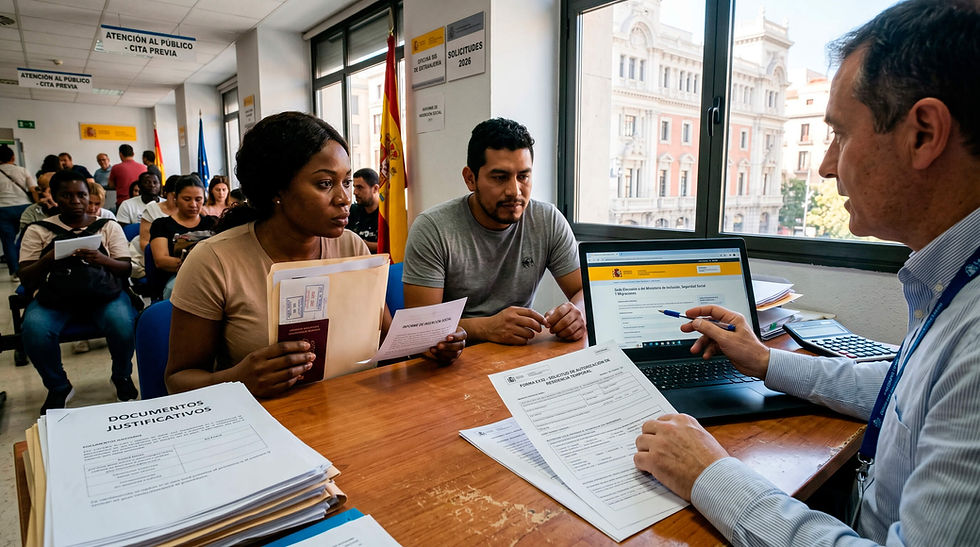
Amnesty 2026 in Spain requires proof of presence in the country before January 1, 2026. A vulnerability certificate and a correctly completed EX32 form are also necessary.
Legalization of foreigners through extraordinary mechanisms requires strict compliance with bureaucratic procedures established by relevant ministries. The government has approved new rules for the regularization of migrants, which radically change the approach to integration assessment. The procedure is limited by strict timeframes. Applicants must provide a comprehensive package of documents confirming their continuous presence in Spain. VissumLex practice shows that the slightest mistake in filling out questionnaires inevitably leads to a refusal. The main requirement is to provide irrefutable evidence of continuous stay in the kingdom until the specified date.
Extraordinary arraigo grants the right to legal status. Candidates must meet three basic criteria detailed in the new royal decree. The first criterion includes documentary proof of physical presence inside the country. The second criterion requires obtaining a special social report from municipal authorities. The third criterion implies a complete absence of criminal records in the country of origin and in Spain itself. Document submission is carried out exclusively electronically through specialized state portals. Applicants use the digital platform of the Ministry of Integration to upload the formed dossier. Amnesty 2026 in Spain completely excludes the possibility of traditional paper document flow. Professional legal support minimizes the risks of application rejection at the initial verification stages.
Legal Framework: Real Decreto 316/2026 of April 14
The normative act Real Decreto 316/2026 regulates the procedure for extraordinary regularization. The document establishes amnesty deadlines and applicant evaluation criteria.
The legislative framework relies on the new royal decree. Real Decreto 316/2026 entered into legal force in the spring of the current year. The document defines the legal status of illegal migrants in a vulnerable situation. The text of the decree contains clear instructions for regional departments and social services. Legalization of foreigners is based on the principles of humanitarian protection and social integration. The decree cancels previous temporary instructions, unifying migration protocols. The normative act introduces the legal concept of extraordinary vulnerability. The legislator has set extremely strict amnesty deadlines. The application acceptance period is strictly limited and not subject to revision.
Procedure Stage | Start Date | End Date | Legal Action |
Decree publication | April 14, 2026 | April 15, 2026 | Entry into force of Real Decreto 316/2026 |
Portal opening | April 16, 2026 | June 30, 2026 | Electronic document submission |
Certificate issuance | April 20, 2026 | June 25, 2026 | Processing of Certificado de vulnerabilidad |
Acceptance closure | June 30, 2026 | June 30, 2026 | Blocking of the application acceptance system |
The submission window closes on June 30, 2026. Delegate the collection of evidence for form EX32 to our lawyers.
Amnesty deadlines cannot be extended under any circumstances. According to the regulations, the system automatically blocks new applications after the deadline. Applicants must comply with the established schedule of interaction with state authorities. Violation of deadlines completely excludes the possibility of reviewing the collected dossier. Real Decreto 316/2026 requires careful study of every paragraph. Lawyers analyze each point of the normative act to protect clients' interests. VissumLex practice confirms the extreme strictness of migration authorities when checking deadlines.
Differences Between Extraordinary Legalization and Classic Arraigo
Extraordinary arraigo does not require a three-year continuous stay in the country. The procedure allows obtaining a residence permit without a contract.
Classic social arraigo requires a long wait and the collection of a huge number of certificates. The candidate must prove three years of continuous presence in Spain. Extraordinary arraigo radically reduces this mandatory period. It is sufficient to confirm presence before January 1, 2026, with any official documents. The second key difference concerns the formalization of labor relations. The standard procedure obliges providing a pre-contract for at least thirty hours per week. The new amnesty 2026 in Spain completely eliminates this complex requirement. The applicant obtains a residence permit without a contract. This significantly simplifies the legalization process for the most vulnerable categories of citizens.
The third difference lies in the methodology of assessing social integration. The classic path requires mandatory completion of municipal integration courses. Extraordinary arraigo is based exclusively on the assessment of current social vulnerability. The candidate proves the impossibility of a safe return to their homeland. The fourth difference is the processing speed of the submitted dossier. Regular applications are reviewed by officials for up to six months. The new procedure involves accelerated digital processing through centralized systems. The fifth difference concerns strict financial guarantees. Standard arraigo requires confirmation of the potential employer's stable income. The extraordinary procedure evaluates solely the personal situation of the migrant. Legalization of foreigners under the new decree has become more accessible. However, bureaucratic requirements for paperwork remain extremely high.
Step-by-Step Algorithm for Obtaining the Certificado de Vulnerabilidad
Processing the Certificado de vulnerabilidad requires contacting municipal services. The document confirms the applicant's social insecurity.
The process begins with a preliminary appointment through the electronic system. The applicant contacts the local municipality at their actual place of residence. The Certificado de vulnerabilidad is issued by qualified social workers after an inspection. The procedure requires the mandatory personal presence of the candidate at all stages. The specialist conducts a detailed structured interview with the migrant. Current housing conditions and the overall financial situation of the family are evaluated. The Certificado de vulnerabilidad is an absolutely mandatory element of the final dossier. Without this document, submitting the application is technically impossible.
The algorithm includes several consecutive bureaucratic stages. First, basic certificates regarding family composition and income are collected. Then, a detailed primary social assessment questionnaire is filled out. After that, the exact date of the face-to-face interview is scheduled. The social worker analyzes the provided data and forms a preliminary conclusion. The decision is made collectively by a special municipal commission. The issuance of the ready document takes from two to four weeks. VissumLex practice shows frequent delays due to the high workload on departments. It is recommended to start the certificate acquisition process as early as possible. The Certificado de vulnerabilidad has a strictly limited validity period. The document is valid for only three months from the moment of signing. The applicant must manage to submit the main dossier within this period.
Interaction with Asistencia Social Authorities
Asistencia social authorities assess housing and economic conditions. Successful completion of the interview guarantees the issuance of a social report.
Communication with social services requires thorough preliminary preparation. Asistencia social evaluates the degree of the migrant's integration into the local community. Inspectors verify the authenticity of the provided information through interdepartmental databases. A sudden visit by a specialist to the applicant's actual place of residence is possible. Asistencia social analyzes the family composition of the illegal migrant in detail. The presence of minor children is an extremely significant factor for approval. Single migrants also have a legal right to obtain the certificate. The main thing is to documentarily prove the complete lack of means of subsistence.
Inspectors request official statements from all bank accounts. The presence of registered real estate in the applicant's homeland is also checked. Interaction takes place exclusively in the official Spanish language. If necessary, the presence of a certified translator at the interview is allowed. VissumLex lawyers prepare clients for the interview, working through possible scenarios. We develop an optimal strategy for answering tricky questions from inspectors. Asistencia social strictly follows the internal protocols of the ministry. Any identified contradictions in testimonies immediately lead to a refusal. The decision of the social service can be appealed administratively. However, the appeal process takes an unacceptably long time. According to the regulations, it is better to initially provide a flawlessly prepared dossier.
Completion and Registration of Form EX32
Form EX32 is the main application for extraordinary regularization. The document is submitted through the electronic registry of the ministry.
The official EX32 blank contains five mandatory sections to fill out. The first section requires the exact specification of personal passport data. The second section is entirely devoted to the applicant's current contact information. The third section describes the specific legal grounds for legalization. The fourth section includes a detailed list of all attached documents. The fifth section is intended for the digital signature of the applicant or their representative. Form EX32 is filled out exclusively in block letters without corrections. Errors and any corrections on the form are strictly prohibited.
Document submission is carried out through the state platform Mercurio. The applicant must have a valid digital certificate for authorization. Form EX32 is signed with a qualified electronic signature. The system automatically generates an official receipt of application registration. This document legally confirms the fact of successful application submission. Form EX32 requires advance payment of the established state fee. The payment receipt must be attached to the electronic dossier. VissumLex practice shows the critical importance of checking the format of uploaded files. All documents are scanned strictly in high-resolution PDF format. The size of each individual file must not exceed the established limit. An incorrect format inevitably leads to an automatic technical refusal. Form EX32 is processed by specialized automated systems of the ministry.
Requirements for the Evidence Base Prior to January 1, 2026
Evidence of presence must be issued by official Spanish authorities. Medical certificates and bank statements are priority documents.
Amnesty 2026 in Spain requires the provision of irrefutable evidence. The candidate proves their presence in the country strictly before 2026. Documents must contain the full name and surname of the applicant. The presence of a clear date of issue and the official seal of the institution is mandatory. Only official papers from state or municipal structures are accepted. Private rental contracts require mandatory notarization. Submitting documents without solid evidence is absolutely pointless.
An exhaustive list of valid evidence includes the following items:
Certificate of registration (Certificado de empadronamiento). This is the most reliable and priority document for migration services.
Medical records from public clinics. Recorded visits to a doctor strictly before January 1, 2026, are taken into account.
Statements from Spanish bank accounts. Transactions must confirm regular financial activity in the country.
Certificates of money transfers through official systems. Transfers from Spain to the applicant's homeland are considered.
Certificates of completion of language courses. The educational institution must have valid state accreditation.
Public transport cards with personalization. An official statement of regular balance top-ups is required.
Utility bill payment receipts. The applicant's name must be clearly stated on the invoice.
Documents from recognized charitable organizations. Official certificates from the Red Cross or Caritas are accepted.
Reports to the national police regarding lost documents. The registration date of the report reliably records presence in the country.
Consular certificates of registration. The document is issued by the official embassy of the country of origin.
Every provided document undergoes a thorough multi-level check. Migration authorities use closed databases to verify information. Forging evidence entails serious criminal liability. According to the regulations, any falsification immediately leads to deportation. VissumLex lawyers conduct a strict audit of every document before submission. We form the most reliable evidence base for our clients.
The Role of UTEX and Automatic Assignment of NUSS
The UTEX department centrally processes amnesty applications. Approval of the dossier entails the automatic assignment of a NUSS number.
Unidad de Tramitación de Expedientes was created specifically for the current amnesty. It is a centralized division of the Ministry of Integration, located in the capital. UTEX effectively relieves regional migration offices from the influx of applications. The department uses modern artificial intelligence algorithms for data processing. The primary sorting of incoming dossiers occurs automatically. Unidad de Tramitación de Expedientes checks the basic completeness of uploaded documents. If papers are missing, the applicant is given exactly ten working days. This period is provided for the prompt submission of missing certificates.
If the dossier is successfully approved, the next technological stage is launched. The system automatically generates an electronic request to the social security fund. The applicant is instantly assigned a unique NUSS number. This is the individual social security number (Número de la Seguridad Social). NUSS is absolutely necessary for subsequent legal employment in Spain. Previously, migrants obtained this number independently, standing in long queues. Now the process is fully automated and hidden from the user.
Amnesty 2026 in Spain: Frequently Asked Questions
This section contains answers to key questions about extraordinary regularization. The information is based on the current norms of 2026.
The Arraigo Extraordinario procedure raises a huge number of questions among applicants. Migration legislation contains many hidden legal nuances. Our specialized lawyers have analyzed the most typical situations from practice. Detailed explanations on the most pressing topics are presented below.
Can Form EX32 Be Submitted Without an Employment Contract?
Yes, the procedure allows obtaining a residence permit without a contract. The assessment is based on social vulnerability criteria.
The extraordinary amnesty 2026 in Spain radically changes the old rules. The applicant is no longer obliged to look for a potential employer in advance. A residence permit without a contract is issued for a period of one year. This status grants a full and unconditional right to work. The migrant can work for hire or become an individual entrepreneur. The absence of a strict tie to a specific employer reduces the risks of labor exploitation. According to the regulations, a confirmed vulnerability status completely replaces an employment contract. This is the main and undeniable advantage of the new royal decree.
What Documents Confirm Presence in Spain Before 2026?
Any official documents with a date, seal, and name are accepted. Priority is given to municipal registrations and medical records.
The evidence base must be as continuous and logical as possible. The ideal option is a complete historical extract of municipal registration. If there is no registration, reliable alternative proofs of presence are used. Detailed certificates from state hospitals are perfectly suitable. Nominal receipts from pharmacies when purchasing prescription drugs are accepted. Bank transactions in Spanish supermarkets are also taken into account during the review. It is important to prove physical presence exactly before January 1, 2026. Indirect evidence is always considered by inspectors in strict totality.
What to Do If UTEX Delays the Issuance of NUSS?
The delay may be caused by technical failures in the system. It is recommended to submit an official request through the electronic registry.
The automatic assignment of NUSS sometimes experiences unforeseen technical failures. Databases of various ministries can synchronize extremely slowly. If a positive decision is received, but there is no number, action must be taken. A lawyer submits an official electronic petition to the technical support service. The request is sent directly to the Tesorería General de la Seguridad Social. A positive decision from the UTEX department must be attached to the petition. Usually, such a problem is resolved within five working days. Independent visits to the social security office do not bring results.
Is It Possible to File an Appeal After an Amnesty Refusal?
Yes, the law provides the right to an administrative appeal. The appeal is filed within one month after the refusal.
A refusal by the migration service is not a final sentence for the applicant. The candidate has a legal right to file a Recurso de reposición. This is a standard administrative appeal to the same reviewing body. The filing period is exactly one month from the moment of notification. It is necessary to carefully analyze the true reasons for the rejection of the submitted application. Often, a refusal is associated with a banal lack of one supporting document. VissumLex lawyers form a legally reasoned complaint with new evidence. If the administrative appeal is rejected, only the complex judicial path remains. Litigation usually takes from one to two years.
How to Prove Vulnerability Status for Asistencia Social?
The status is proven by a lack of income and poor housing conditions. The social worker assesses the situation based on documents and an interview.
Proving social vulnerability requires the most comprehensive approach possible. The applicant provides current bank statements with a zero balance. A room sublease agreement confirms the lack of one's own comfortable housing. The presence of severe chronic diseases significantly strengthens the candidate's position. Foreign medical certificates must be translated by a certified sworn translator. Asistencia social takes into account the objective impossibility of returning to the country of origin. Political repressions or deep economic crises in the homeland are an argument. A personal interview with an inspector always plays a decisive role.
Will the Application Acceptance Deadlines Be Extended After June 30, 2026?
No, the normative act does not provide for an extension of deadlines. The application acceptance platform will close automatically on June 30.
The legislation of 2026 is absolutely categorical regarding the established deadlines. Real Decreto 316/2026 sets extremely strict timeframes for the procedure. The government has officially announced the absence of plans to extend the current amnesty. Submitting documents after June 30 will become technically impossible. The electronic portal of the ministry will permanently stop accepting new EX32 forms. Any circulating rumors about extending the amnesty have no basis. VissumLex practice shows that delaying submission is extremely dangerous. The last days of the system's operation are often accompanied by critical technical failures.


