
Residence Permit for Parents in Spain: RD 1155/2024

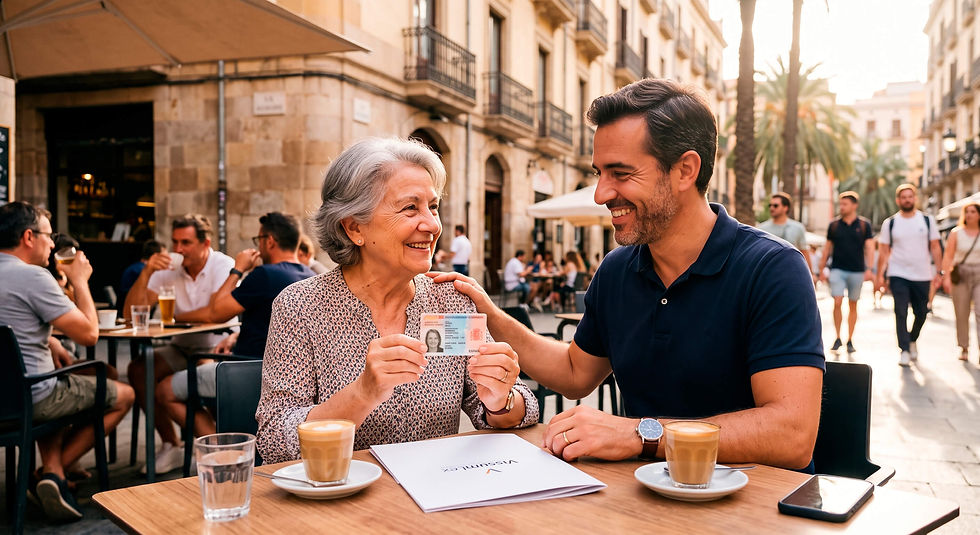
The procedure for legalizing the older generation has undergone radical changes. RD 1155/2024 establishes strict standards of proof. Successful family reunification with parents in Spain requires flawless financial analytics. Consulates meticulously verify the sources of funds. Classic bank transfers are often unavailable. Applicants are forced to seek alternative legal routes. VissumLex lawyers have developed reliable algorithms. We help overcome bureaucratic barriers. Our practice is based on current 2026 legislation. The new immigration regulation requires strategy adaptation. Migration officers apply strict compliance. Every transaction undergoes a detailed audit. Errors in document preparation lead to immediate refusal. The applicant must prove the absolute legality of income. The sponsor in Spain assumes full responsibility. The state excludes the possibility of a social burden on the budget. Therefore, the requirements for financial viability are maximal. The process requires the participation of a qualified lawyer. Independent submission often ends in a loss of time. We offer professional support for complex cases.
Criteria for Financial Dependence (Dependencia económica)
Dependencia económica is recognized if the sponsor covers more than half of the relative's expenses. The status of Ascendientes a cargo requires documentary proof of regular transactions.
Spanish migration law strictly interprets the concept of dependency. Financial dependence must be absolute and provable. The sponsor is obliged to transfer funds systematically. One-time large sums will arouse justified suspicions. The consul will request a transaction history for the last year. The process of family reunification with parents in Spain begins with an income audit. The applicant must have stable earnings. The minimum income threshold for the sponsor is regulated by law. The current IPREM indicator for 2026 is taken into account. Additionally, the cost of living in the country of origin is assessed. Reagrupación familiar does not allow for approximate calculations. Every figure must be supported by official papers. The Oficina de Extranjería analyzes the sponsor's tax returns. The department verifies the legal origin of the sent money. The sponsor must be a tax resident of Spain. Shadow income is not considered in the calculation. A 3F certificate from the tax service is required. An indefinite employment contract is also necessary. Individual entrepreneurs provide quarterly reports. The financial stability of the sponsor is the foundation of a successful case.
The 51% Budget Rule: How It Is Calculated
The sponsor must prove the financing of at least 51% of the parent's basic needs. The calculation is based on official statistics of the subsistence minimum in the country of origin.
The calculation formula is extremely pragmatic. First, the total income of the parent is determined. This includes pensions, rent, and social benefits. Then, the minimum consumer basket is calculated. The difference between these amounts constitutes the budget deficit. The sponsor must cover this deficit completely. The transfer amount must exceed the parent's own income. Financial dependence is considered proven when this proportion is met. For example, a mother's pension is 200 euros. The subsistence minimum in her region is 500 euros. The sponsor must transfer at least 301 euros monthly. These Remesas must arrive strictly on schedule. Deviations in the schedule are unacceptable. The consulate will regard pauses as a lack of need. Successful family reunification with parents in Spain requires pedantry. Keep all receipts and bank statements. The calculation should be presented as a summary table. The table is translated into Spanish by a sworn translator. The consul must immediately see the final figures. Complex mathematical calculations are best simplified. The goal is to show an obvious lack of funds for the parent.
Macroeconomic Analysis of the Country of Origin
The evidence base includes certificates from the statistical authorities of the country of origin. An analysis of inflation and medical costs justifies the size of the necessary transfers.
The basic subsistence minimum is often insufficient. Elderly people require paid medical treatment. Medicines and medical services are expensive. The sponsor has the right to include these expenses in the calculation. Receipts from pharmacies and private clinics will be required. Certificates regarding the cost of utility services are also necessary. VissumLex lawyers prepare a consolidated economic report. The document is translated into Spanish. An apostille or consular legalization is mandatory. This report is submitted along with the main package. Dependencia económica is justified by numbers, not emotions. The new immigration regulation allows the submission of such reports. Practice shows the high effectiveness of this method. The consul sees the real picture of expenses. The probability of visa approval increases significantly. The report must contain links to official sources. Data from national statistical agencies are used. World Bank reports are also applied. The macroeconomic cross-section proves the impossibility of survival without help. This is a key argument for the migration service.
Proof of Transfers Under SWIFT Blockade Conditions
Sanctions and the disconnection of SWIFT require the use of alternative financial gateways. The legalization of such transactions is carried out through notarial mechanisms and blockchain analytics.
The geopolitical situation has complicated cross-border payments. Direct bank transfers to a number of countries are impossible. Classic money transfer systems are also limited. Applicants face insurmountable obstacles. A standard visa refusal for family reunification is often associated with this. Consulates demand a transparent chain of fund movements. The use of illegal intermediaries causes distrust among officials. However, the law does not prohibit alternative methods. The main requirement is the ability to identify the sender and receiver. Transfers via crypto have become a harsh necessity. Spanish legislation in 2026 adapts to these realities. RD 1155/2024 introduced the concept of digital evidence. Now digital assets can serve as confirmation of transactions. But the process of their legalization is extremely complex. Flawless technical and legal preparation is required. Migration officers undergo special training. They know how to read blockchain explorers. An attempt at deception will lead to a lifetime ban.
Legalization of P2P Transfers and Crypto Assets (USDT)
The use of stablecoins requires strict documentation of each conversion stage. The chain "Euro — Crypto Exchange — P2P — Local Currency" must be continuous.
Stablecoins ensure the stability of transfer values. USDT is the most popular instrument. Spanish banks allow funding crypto exchange accounts. The sender buys a digital asset for euros. Then the asset is transferred to the recipient's wallet. The recipient sells the asset via a P2P platform. Fiat money is deposited into their local bank card. This chain seems simple only at first glance. Migration authorities require documentary proof of every step. Transfers via crypto must be absolutely transparent. Anonymous wallets are categorically unsuitable. Exchanges must have a license and a KYC procedure.
Compliance Matrix: Algorithm for Legalizing Digital Transfers
Transaction Stage | Confirmation Document | Extranjería Requirement |
1. Verification (KYC) | Account certificate from the exchange | Full name match with passport |
2. Bank Trail (Spain) | Sponsor's bank statement | Transaction strictly to exchange details |
3. Asset Purchase | Trade History (Order) | Fixing the Euro to USDT exchange rate |
4. Internal Transfer | TxID (Хэш транзакции) | Record in the public blockchain |
5. P2P Conversion | Closed order receipt | Amount match with bank statement |
6. Bank Trail (Home) | Parent's bank statement | Receipt of funds from P2P merchant |
This algorithm eliminates gaps in the chain. Dependencia económica is confirmed with mathematical precision. VissumLex lawyers control every stage. We help clients download reports correctly. Exchange statements must contain digital signatures. A simple export to Excel will not work. A PDF format with cryptographic protection is required. Only such documents are recognized as official. Family reunification with parents in Spain depends on these details.
Notarial Affidavits and Indirect Evidence
Screenshots from crypto exchange applications have no legal force without certification. A notarial affidavit transforms digital data into legitimate evidence.
The consul is not obliged to believe printouts from the internet. Any screenshot can be forged in an image editor. Therefore, the intervention of a Spanish notary is required. The notary draws up an Acta de Presencia (Act of Presence). They personally log into the sponsor's crypto exchange account. The notary records the transaction history in an official protocol. This document has absolute legal force. The Oficina de Extranjería is obliged to accept it for consideration. Family reunification with parents in Spain is often saved by this exact document. Indirect evidence is additionally used. The sponsor can pay for the parent's purchases directly. For example, ordering grocery delivery via the internet. Paying for medical insurance from their Spanish card. Buying airline tickets for the parent's visits. All these receipts form a single financial profile. The status of Ascendientes a cargo becomes undeniable. Indirect evidence strengthens the main line of defense. It shows real care for the relative.
VissumLex Practice: Successful Appeal under RD 1155/2024 In March 2026, the VissumLex team successfully challenged a visa refusal for family reunification. The client (a Spanish resident) transferred money to his pensioner mother in the CIS. Due to sanctions, the Bybit-P2P-Local Bank chain was used. The consulate issued a refusal, citing the "inability to trace the source of funds." We filed a Recurso de alzada in Madrid. A notarial Acta de Presencia was attached to the appeal. The document certified 12 monthly conversion cycles. We also provided a report from a certified blockchain analyst. The expert confirmed the continuity of the movement of funds. The General Directorate of Migration upheld the complaint. Financial dependence was recognized as proven. The visa was issued 14 days after the decision. This case created an important precedent for the application of RD 1155/2024. We proved the legitimacy of digital assets. Now this mechanism works like clockwork.
Two-Stage Legalization Procedure
The process is divided into an administrative stage in Spain and a consular stage abroad. Approval of the first stage does not guarantee automatic visa issuance.
The procedure requires strategic planning. The applicant cannot simply go to the consulate. First, the sponsor initiates the process within Spain. This is done through the Mercurio electronic platform. A digital certificate is required. The document package is uploaded to the system. The state fee is paid in advance. The receipt is attached to the electronic file. Reagrupación familiar begins with a background check of the sponsor. The state assesses their reliability. The absence of criminal records in Spain is verified. Credit history and tax debts are analyzed. Any debt to the treasury will lead to a refusal. Therefore, a full audit is conducted before submission. Lawyers request certificates from all registries. Only after this is the final package formed.
Stage 1: Permission from the Oficina de Extranjería
The Spanish migration service assesses the housing conditions and financial viability of the sponsor. The review lasts from 45 to 90 days.
At this stage, the sponsor's right to invite a relative is proven. The Oficina de Extranjería studies the employment contract. The stability of the employer company is assessed. If the sponsor is a businessman, the enterprise's balance sheet is checked. It is important to show steady income growth. A report on housing suitability is also submitted. The department issues a resolution (Resolución favorable). This document is valid for a limited time. Usually, two months are given for the next step. If the deadline is missed, the procedure is annulled. Family reunification with parents in Spain requires strict time management. Lawyers track the case status daily. The notification arrives in the electronic cabinet. We promptly inform the client about the result.
Stage 2: Consular Verification and Visa Issuance
The parent submits documents to the Spanish consulate in their country of residence. The consul checks medical certificates, police clearance, and the fact of dependency.
Upon receiving permission, the parent books an appointment. Queues at consulates can be long. Appointments must be caught in advance. The parent attends the submission in person. A passport, medical certificate, and police clearance certificate are submitted. Documents must be apostilled. Translation is performed strictly by a sworn translator (Traductor Jurado). The consul conducts an interview with the applicant. Questions are asked about life in Spain. Knowledge of the sponsor's intentions is verified. The consul has the right to request additional papers. A visa refusal for family reunification most often occurs here. The consulate re-evaluates the transfers. If the consul has doubts, they will issue a refusal. Therefore, the document package must be perfect.
Housing and Medical Insurance Requirements
The sponsor is obliged to provide the parent with comfortable housing and full medical coverage. The Spanish public healthcare system must not bear the costs.
Spain protects its social infrastructure. Elderly people often need medical assistance. The state shifts these costs onto the sponsor. This is a basic principle of migration policy. Housing must meet strict standards. Area, number of rooms, and sanitary conditions are taken into account. Insurance must be equivalent to the state one. No co-payments for doctor visits are allowed. These two elements are checked at the first stage. Without them, obtaining permission is impossible. VissumLex lawyers help arrange the correct policies. We cooperate with leading insurance companies. We also advise on real estate rental issues.
Certificate of Housing Suitability (Informe de habitabilidad)
The document is issued by the city hall at the sponsor's place of residence. An inspector checks the apartment's area and the presence of necessary utilities.
To obtain the certificate, an application is submitted to the Ayuntamiento. The inspector schedules a visit date. They measure the square footage of each room. They check for heating and hot water. Ventilation and natural lighting are assessed. A specific area must be allocated for each family member. If the apartment is too small, the certificate will not be granted. In this case, the sponsor will have to move. The lease agreement must be officially registered. The landlord's consent for the parent's residence is required. Reagrupación familiar requires transparent housing conditions. The process of obtaining the certificate takes about a month. This must be considered when planning timelines.
Private Medical Insurance (Seguro médico privado)
The policy must be issued by a Spanish insurance company. Full coverage (Sin copagos) and no waiting periods (Sin carencias) are required.
Choosing insurance is a critically important step. Cheap policies for tourists are not suitable. A comprehensive medical program is needed. It must include hospitalization and surgical operations. The policy is paid a year in advance. The insurance company must be accredited in Spain. The parent's age strongly affects the cost. For people over 65, tariffs are high. Some companies refuse to insure the elderly. VissumLex lawyers know who to contact. We select optimal coverage options. The policy is attached to the file for Extranjería. Without it, the status of Ascendientes a cargo will not be granted. The parent's health is the sponsor's area of responsibility.
Residence Permit for Parents in Spain: RD 1155/2024: Frequently Asked Questions
We analyze the most complex aspects of migration legislation. Direct answers to questions about the legalization of the older generation.
The procedure raises many questions among expats. The legislation contains hidden nuances and reservations. Errors at the preparation stage are fatal. Below are answers from specialized VissumLex lawyers. We rely on current judicial practice.
For what period do I need to show transfers to parents?
The minimum required period is 12 months prior to the application date. Transfers must be strictly monthly.
The law requires proof of a stable financial connection. A one-year period is considered minimally sufficient. Reagrupación familiar is not approved for a shorter period. Some consulates unofficially require a 24-month history. We recommend preparing statements specifically for two years. Transactions must be rhythmic. Missing even one month will raise questions. If a gap occurs, documentary justification will be required. For example, a certificate of the sponsor's hospitalization. Financial dependence does not tolerate pauses. Transfer amounts should be approximately the same. Sharp jumps in amounts look suspicious. Stability is the main evaluation criterion.
Are receipts from money transfer systems without opening an account suitable?
Yes, they are suitable if the receipt contains full details of the sender and receiver. However, consulates treat them with heightened attention.
Systems like Western Union are legitimate. But they are often used for shadow operations. Therefore, migration officers check them thoroughly. The purpose of the payment must be clearly stated on the receipt. The ideal wording is: "Financial assistance to a relative." Be sure to keep the original receipts. Thermal paper fades quickly. Make notarized copies of all receipts. Family reunification with parents in Spain requires perfect order. If the system allows, request an official statement for the year. The document must contain the organization's seal. Electronic receipts must also be certified.
What to do if the consulate rejected crypto exchange statements?
It is necessary to file an appeal, supporting it with a notarial act and blockchain expertise. Refusal based on the transfer method is illegal.
Consular workers often show conservatism. They may not understand the mechanics of digital assets. A visa refusal for family reunification in such cases is not uncommon. Do not give up. File a Recurso de alzada within the established timeframes. Involve a technical specialist to draft a report. The report should explain the transaction mechanics in simple language. Refer to the norms of RD 1155/2024. The law recognizes electronic evidence as admissible. Transfers via crypto are absolutely legal. VissumLex practice proves the success of such appeals. The main thing is to build a competent legal argumentation.
Is it possible to reunite parents under 65 in 2026?
Yes, but only in the presence of exceptional circumstances of a humanitarian nature. It will be necessary to prove total disability or a severe illness.
The standard rule requires reaching the age of 65. This is the retirement age in most countries. Obtaining the status of Ascendientes a cargo for younger parents is extremely difficult. Exceptions are rarely made. A state-issued medical report will be required. The document must confirm the need for constant care. A certificate of first-group disability will also work. Financial dependence in this case fades into the background. Physical dependence comes to the forefront. The new immigration regulation details these humanitarian criteria. The process requires the participation of an experienced lawyer.
How to prove the absence of other relatives in the country of origin?
Certificates from the registry office, death certificates, or documents on the incapacity of other children are provided. The goal is to prove that the sponsor is the sole support.
Spanish authorities check for the existence of alternative support. If the parent has other able-bodied children in their homeland, a refusal will follow. Reagrupación familiar is approved only when there is no choice. Proving a negative fact is difficult. Family composition certificates are used. Extracts from the house register are provided. If other children live abroad, their residence permits are needed. If they are incapacitated, medical certificates are required. Dependencia económica must be exclusive. The sponsor in Spain must be the sole breadwinner. This is a key requirement of migration policy.
How long does an appeal take in case of refusal?
The review of an administrative appeal takes from 3 to 6 months. Judicial appeal can last more than a year.
Timelines depend on the workload of a specific department. An administrative resource is filed within a month after the refusal. The answer usually arrives in 90 days. If the answer is negative, the path to court opens. The judicial process in Spain is unhurried. Family reunification with parents in Spain can drag on. Therefore, it is important to assemble a perfect document package initially. Preventive work is always more effective than correcting mistakes. A visa refusal for family reunification is easier to prevent. VissumLex lawyers conduct a preliminary audit of chances. We do not take on deliberately losing cases. Our goal is the result. Processing complex family reunification cases is our specialization. Book a consultation to analyze your situation. We will develop a personalized legalization strategy. The older generation deserves a comfortable life in Spain. Entrust the legal routine to professionals.


